Aluminium Scaffolding Rental Hong Kong: Tower Sizes and Quotation Checklist
Aluminium scaffolding rental in Hong Kong: the quick answer
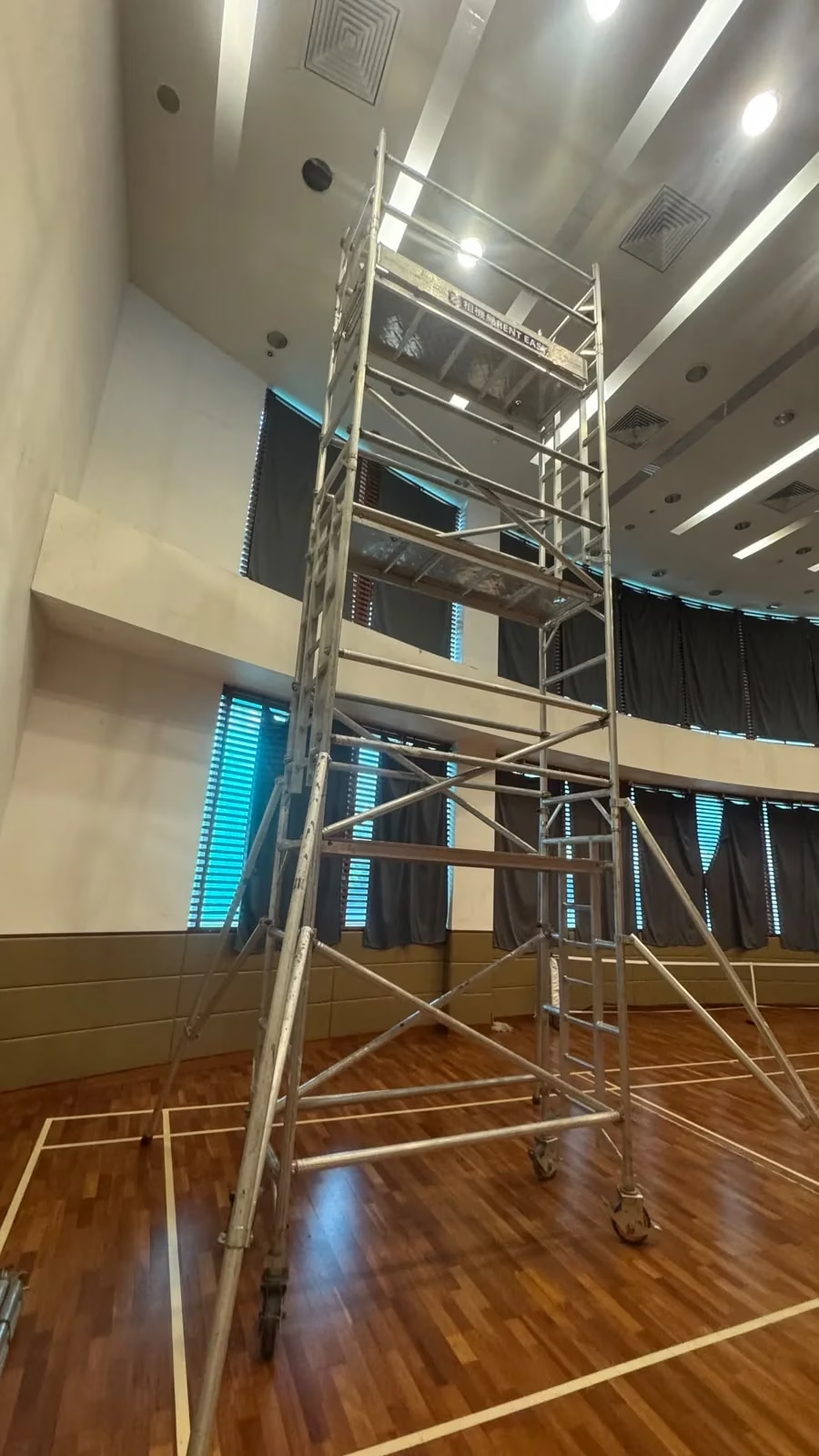
For an aluminium scaffolding rental in Hong Kong, start with the route into the work area and the platform height required—not with a tower name or a single door measurement. A narrow tower may suit constrained access, while a wide tower offers a larger working area where the route, floor and support space allow it. Send the target work point, the tightest part of the delivery route, site photographs and rental dates before requesting a quotation. RentEasy can then confirm an appropriate configuration and the quotation scope for the actual site.
Key Takeaways
- Choose narrow or wide only after checking the full access route, floor condition and working area.
- State the target work point separately from the platform height required for the quotation.
- A door opening alone does not confirm access; turns, thresholds, lift dimensions and site rules also matter.
- Confirm deposit, delivery, collection, assembly, dismantling and any Form 5 arrangement line by line in the formal quotation.
Narrow or wide tower: choose by access and work area
RentEasy’s existing scaffold selection page uses approximately 0.75 m as a common narrow-tower reference width and approximately 1.35 m as a common wide-tower reference width. These are selection references, not a promise that every height or product has the same dimensions. Narrow configurations are often considered for corridors, shop interiors or other constrained routes. Wide configurations can provide more working area, but require adequate room for the tower, outriggers where applicable and the work itself.
Do not use a single door width as a guarantee that a tower will enter. The relevant route may include the clear opening with doors in their actual position, frames, turns, lift doors and cabin dimensions, thresholds, ramps, ceiling constraints, loading rules and the distance from unloading point to work area. A photo and measured route plan allow the proposed configuration to be checked before delivery.
Keep the work point and platform height separate
Platform height is the height from the floor to the deck where the worker stands. The work point is the location of the task, such as a ceiling fitting, duct, sign or wall area. Working reach can vary with the task, worker, tools and site conditions, so it should not be converted using a universal formula. Provide both the work point and the nature of the task; the selected tower should then be confirmed by the supplier and used in accordance with the applicable manufacturer instructions and site assessment.
Complete site-access checklist before asking for a quotation
- Measure the narrowest clear route, including doors, frames, gates, corners and fixed obstructions.
- For a goods lift, provide door opening, internal dimensions, permitted load and building-management requirements.
- Flag stairs, ramps, slopes, thresholds, long pushing distances and any manual handling restriction.
- Show the floor condition and work area, including level ground, drainage, soft ground, pedestrians, wind exposure and space for outriggers where relevant.
- State whether the job is indoors or outdoors, the target work point, requested platform height, task, dates and expected rental period.
- Confirm delivery window, vehicle access, loading bay arrangements, permits, induction requirements and return route.
What should the quotation include?
Ask for the scope to be stated clearly. Depending on the site and arrangement, a quotation may separately address rental period, deposit, delivery and collection, assembly and dismantling, stairs, restricted delivery hours, special access, extended carrying or repositioning, and inspection documentation. Do not assume that deposit, transport, assembly, dismantling or a Form 5 arrangement is automatically included. The current aluminium scaffolding price page is a useful starting point, while the confirmed order and quotation define the applicable scope.
A practical rental process
- Send site photos, route measurements, target work point and rental dates.
- Review the proposed narrow or wide configuration and platform-height requirement.
- Check the written quotation for included items, exclusions, deposit and any inspection arrangement.
- Confirm delivery access and site timing before the order is placed.
- After installation, use the tower only under the applicable site controls and manufacturer instructions. For Hong Kong safety context, see the Labour Department’s Code of Practice for Metal Scaffolding Safety.
Related RentEasyHK guides
Frequently asked questions
What is the difference between a narrow and a wide aluminium scaffold tower?
A narrow tower is commonly considered where the access route is constrained. A wide tower can provide a larger working area where the route, floor and required support space allow it. The correct choice depends on the complete site information, not on a tower label alone.
Will a narrow tower definitely pass through a single door?
No. A clear door opening is only one part of the route. Frames, turns, thresholds, lift access, obstructions and handling constraints must also be checked before access can be confirmed.
What is the difference between platform height and working height?
Platform height is the height of the standing deck above the floor. The work point is the task location to be reached. Tell the supplier both, rather than relying on a fixed reach allowance.
What information should I send for a scaffold quotation?
Send photos of the route and work area, the narrowest route measurements, goods-lift information if relevant, target work point, dates, indoor or outdoor use, task details and any site restrictions.
Does the rental price always include deposit, transport, assembly, dismantling and Form 5?
No. These items can depend on the equipment, site and order arrangement. Check the formal quotation and order confirmation for the included scope, exclusions and any additional site-related charges.
When does a Form 5 matter for a scaffold?
Applicable inspection and reporting duties depend on the site and legal context. Hong Kong’s Construction Sites Safety Regulations, Regulation 38F sets out inspection and approved-form requirements for scaffolds within its scope. Confirm the required arrangement for the project; a Form 5 should not be assumed to be included in every rental.
Can a mobile scaffold tower be moved while a worker or materials remain on it?
No. The Labour Department code states that no worker or heavy material should be on a mobile scaffold during movement. Follow the applicable site procedure and manufacturer instructions when relocating a tower.
Official safety references
This page is a rental-planning checklist, not engineering, legal or safety advice. For Hong Kong requirements, consult the Labour Department’s Code of Practice for Metal Scaffolding Safety and the current Regulation 38F, together with manufacturer information and the project’s site assessment.